COMMERCE + PRODUCT BEHAVIOR / FEATURED CASE STUDY
Making Save for Later impossible to miss.
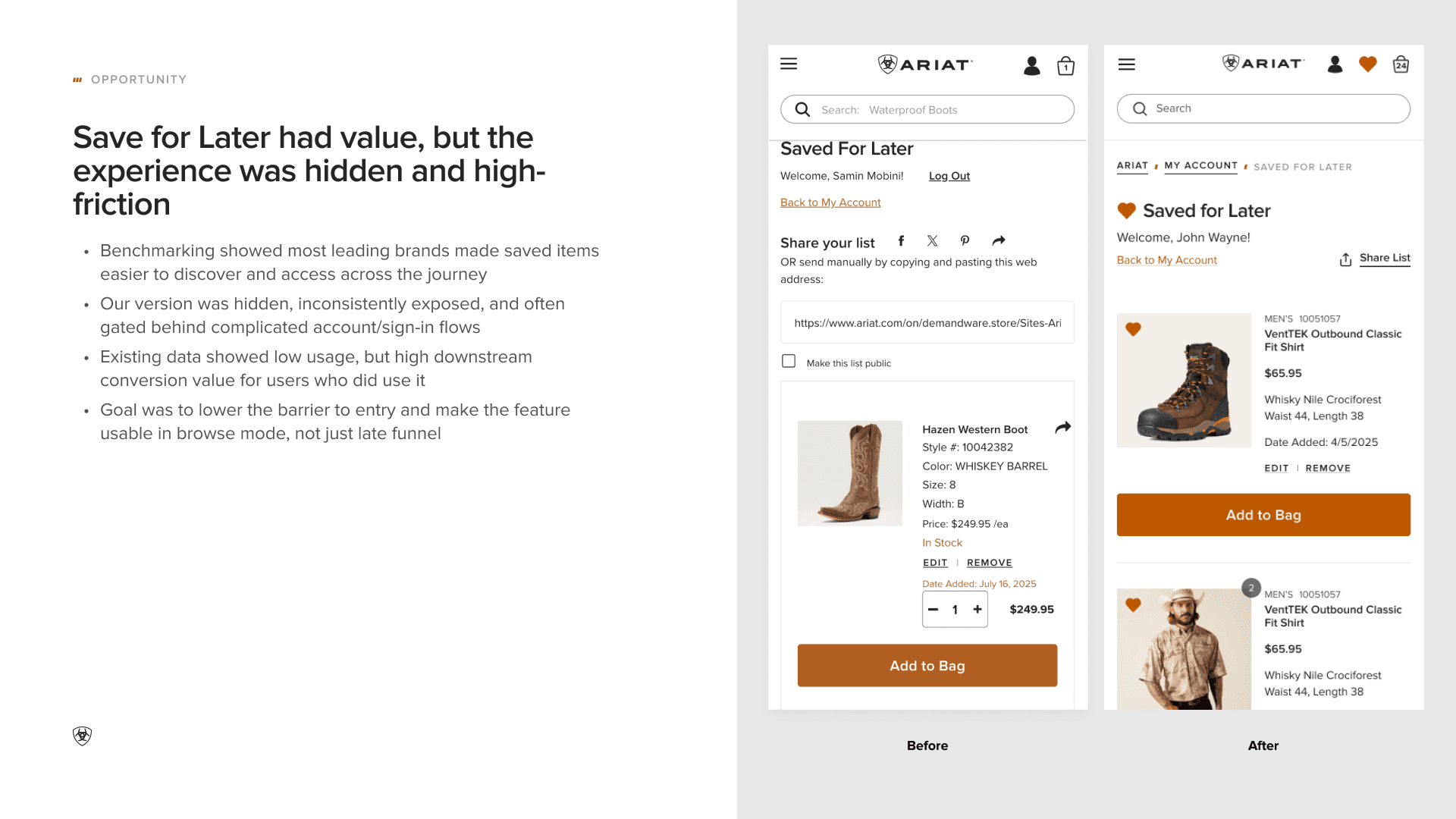
Shoppers had to sign in and choose product details before saving. I worked with Analytics to identify the opportunity, then led a designer through a redesign that let guests save immediately.
THE SIGNAL / PRIMARY EVIDENCE
Shoppers who used Save for Later converted at a high rate.
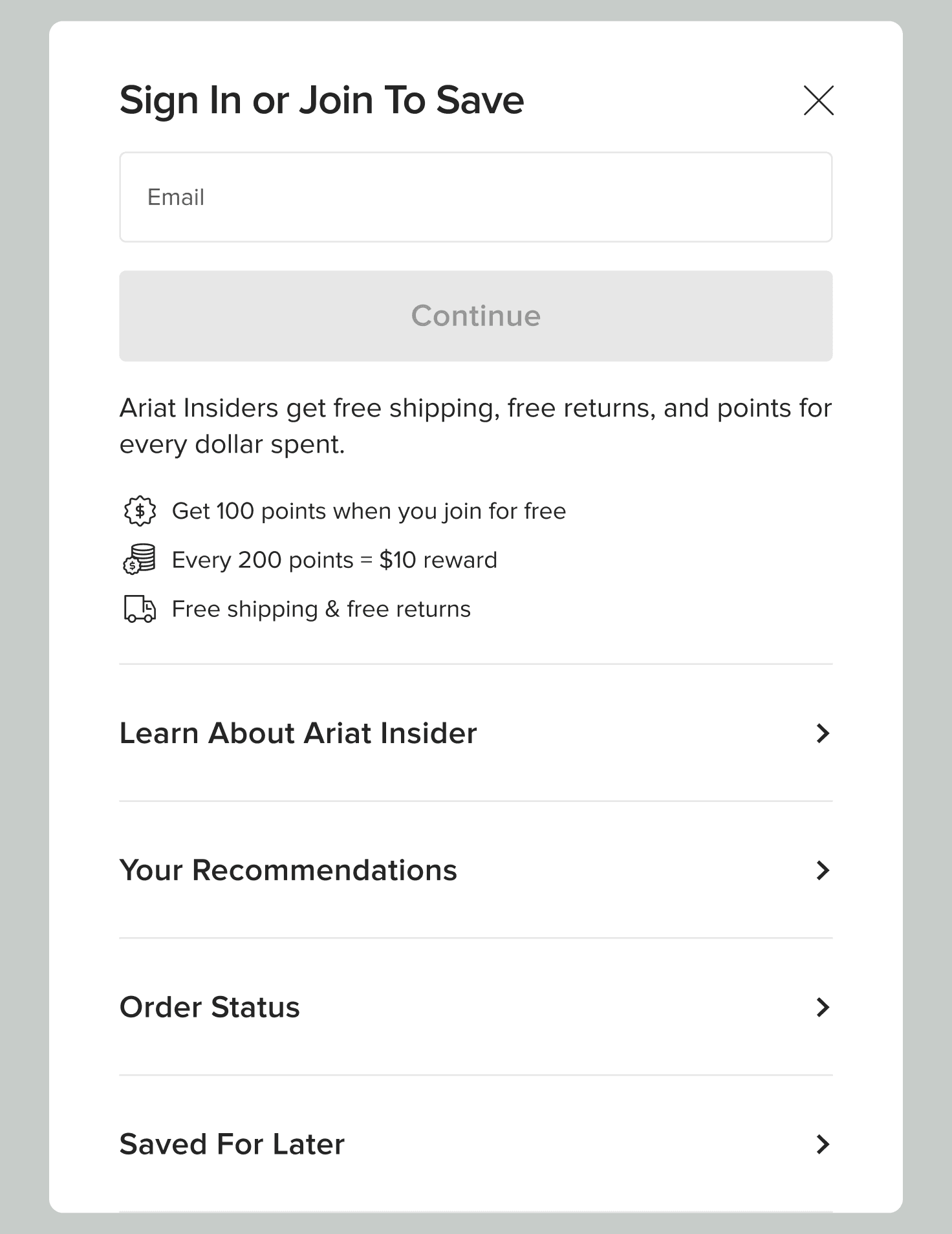
The old flow required an account before someone could save a product they were still considering.
I recommended letting guests save first, with sign-in available to keep the list longer.
SUPPORTING EVIDENCE / FIVE-BRAND BENCHMARK
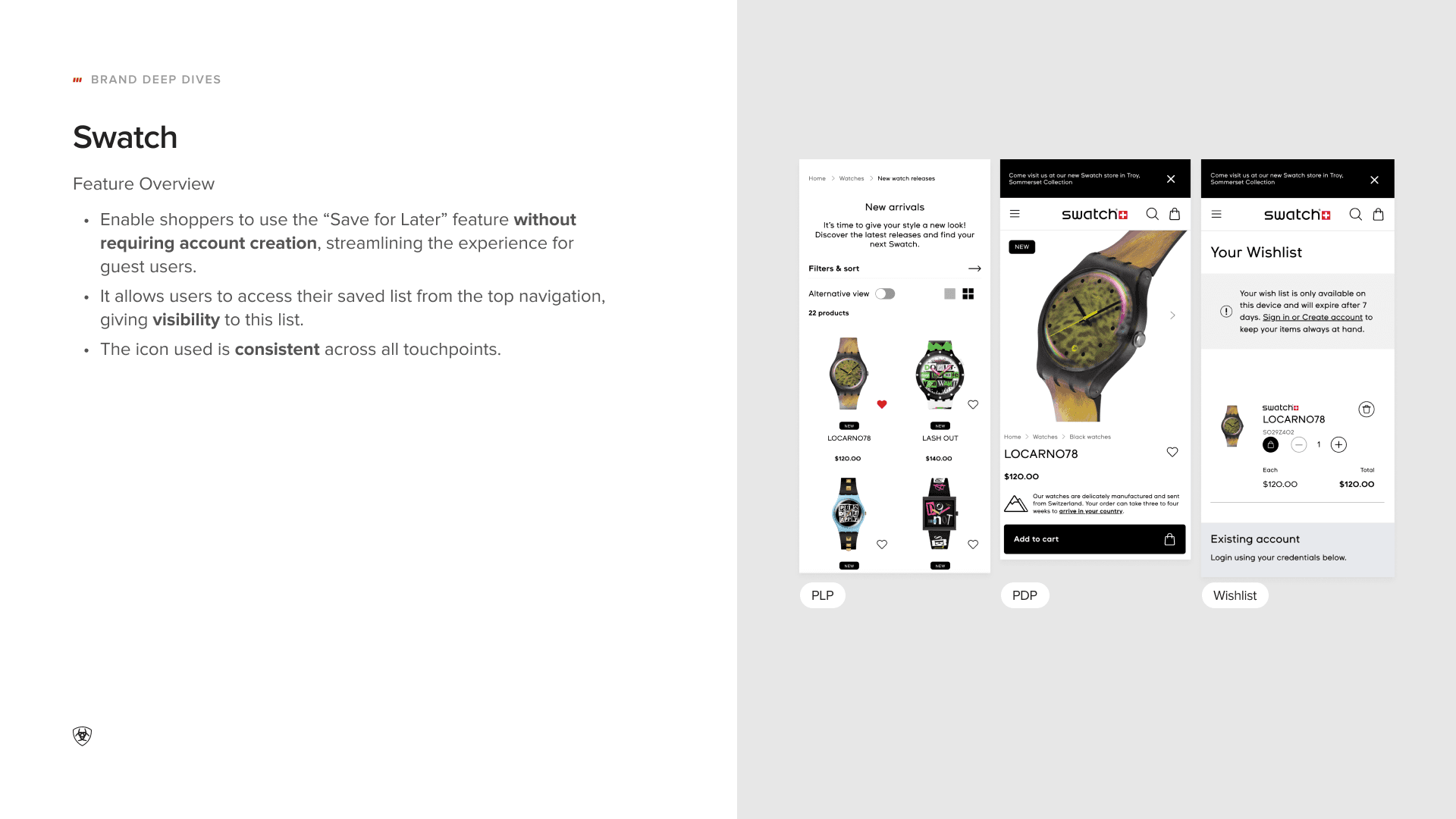
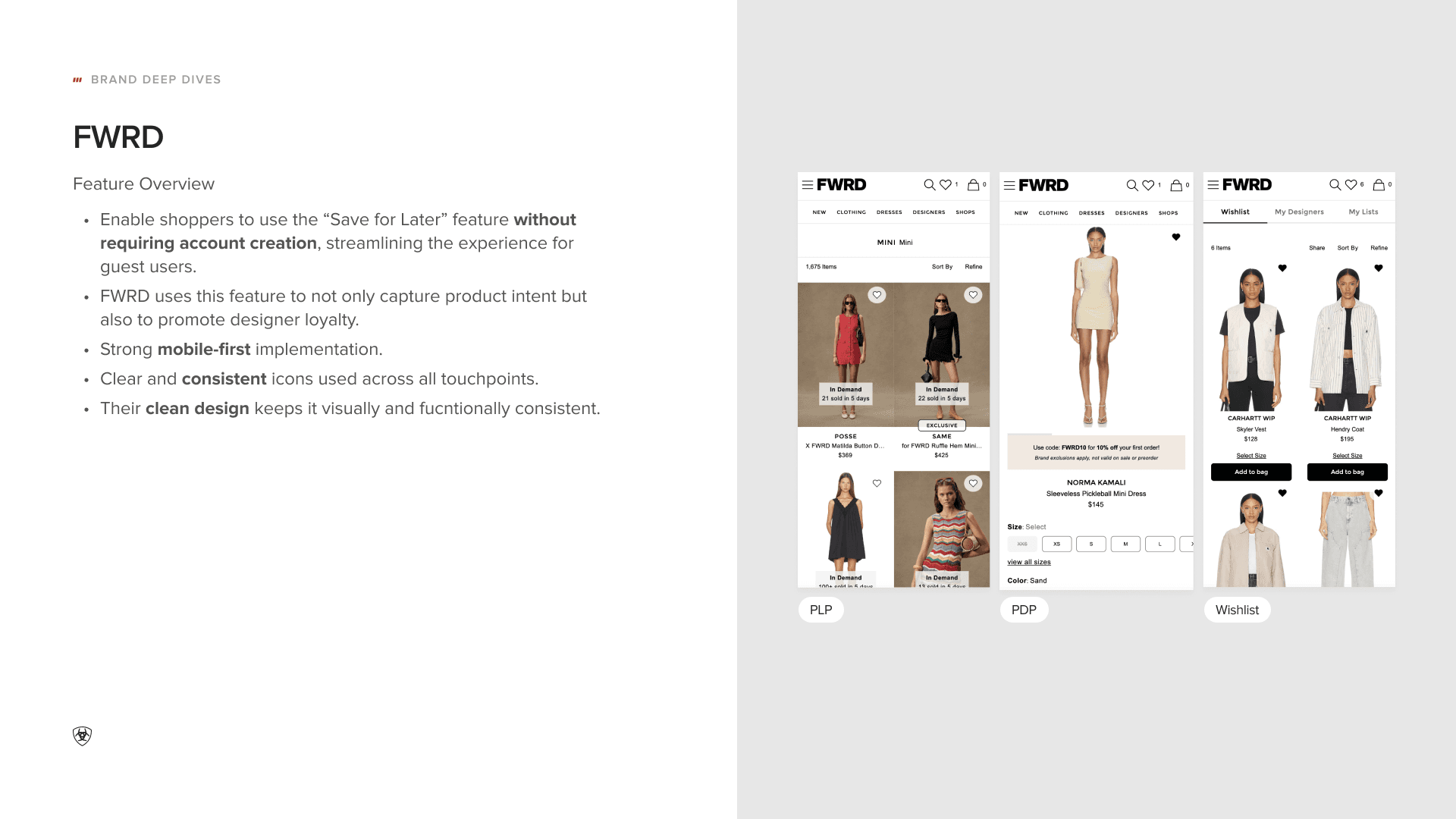
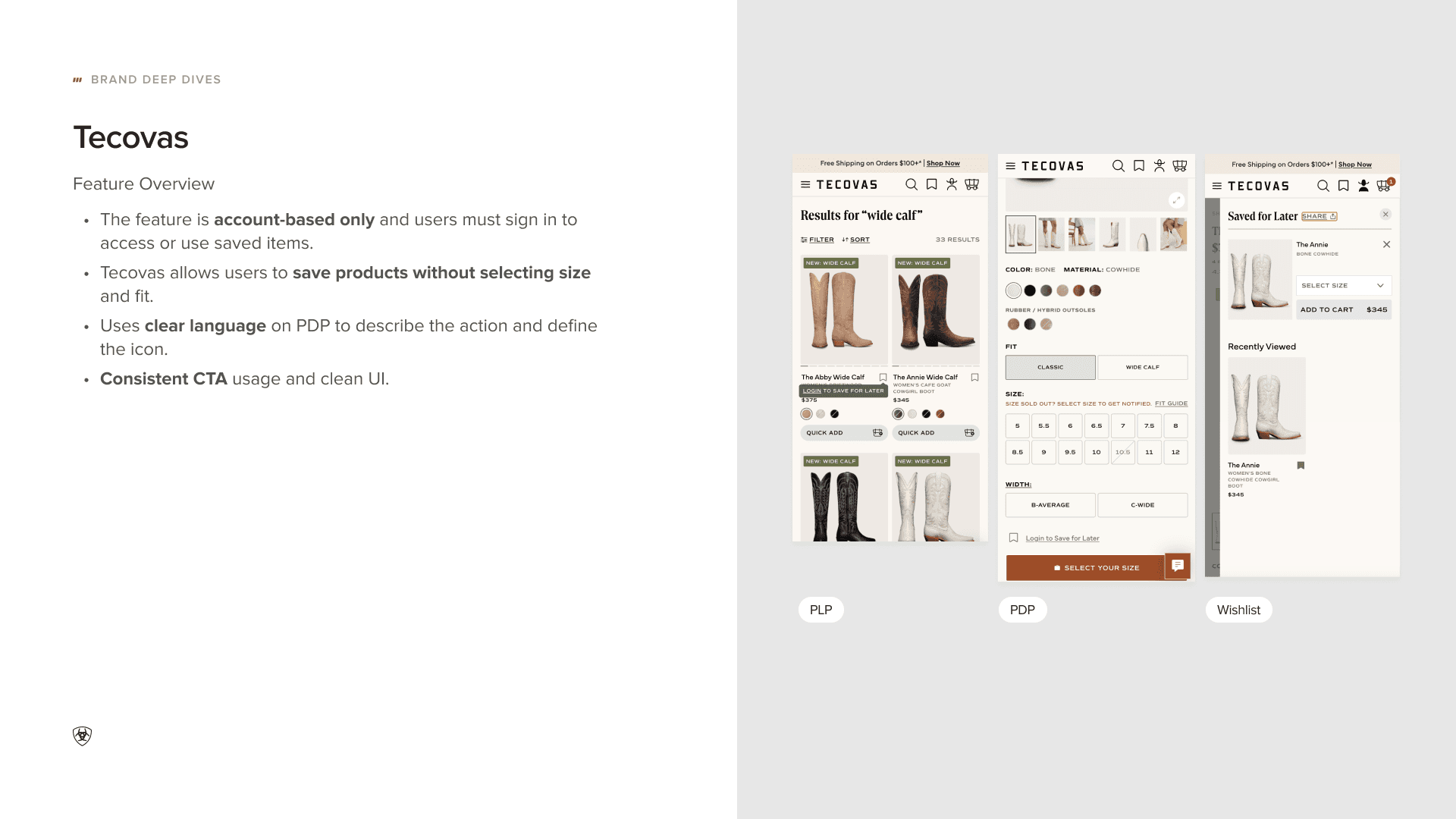
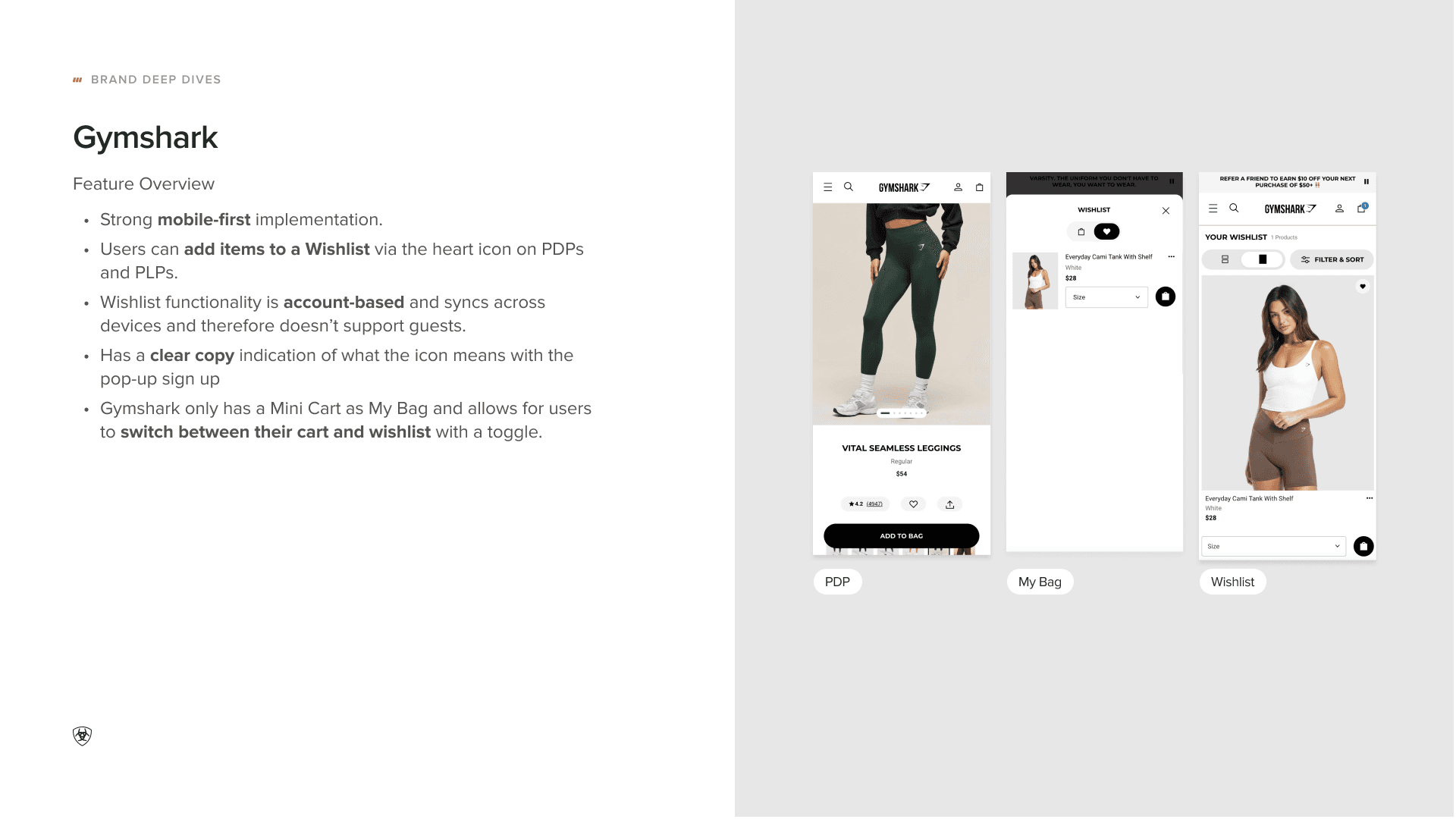
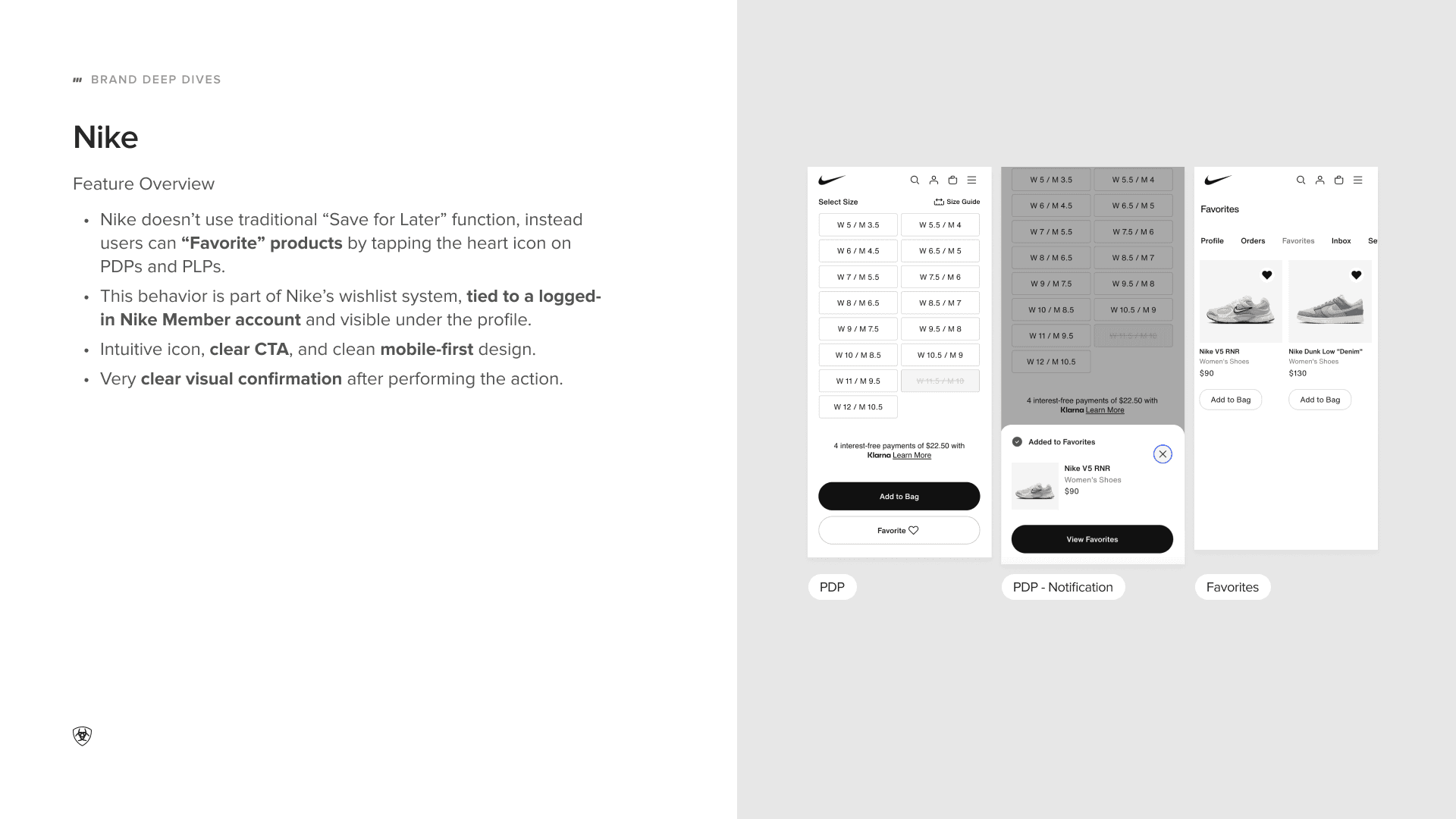
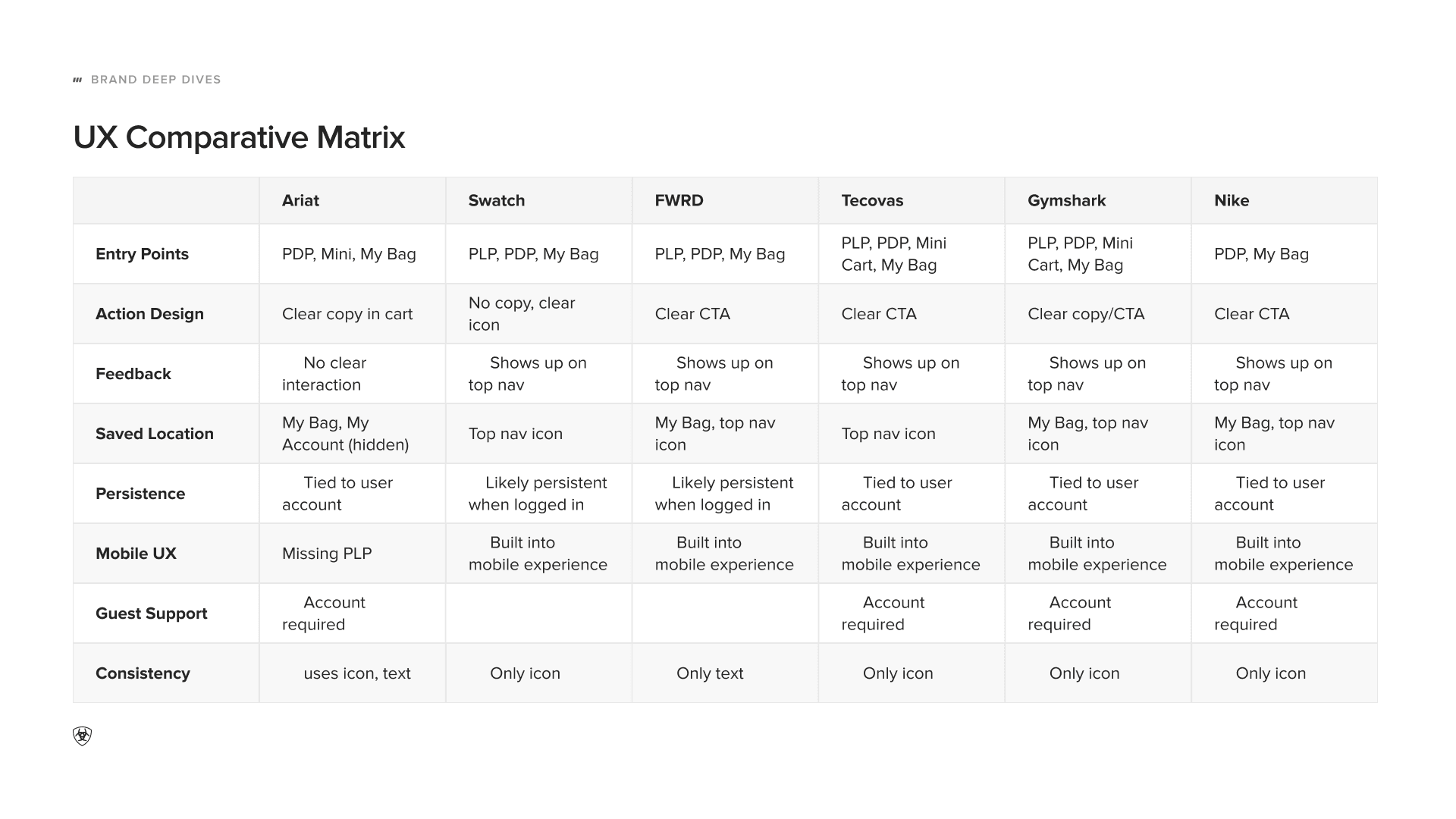
Five-brand benchmarking supported saving during browsing.
I compared how five brands handled discovery, saving, and return visits. Useful patterns included visible hearts, guest saving, and optional sign-in.
THE RECOMMENDATION
Lower the barrier. Make saving part of browsing.
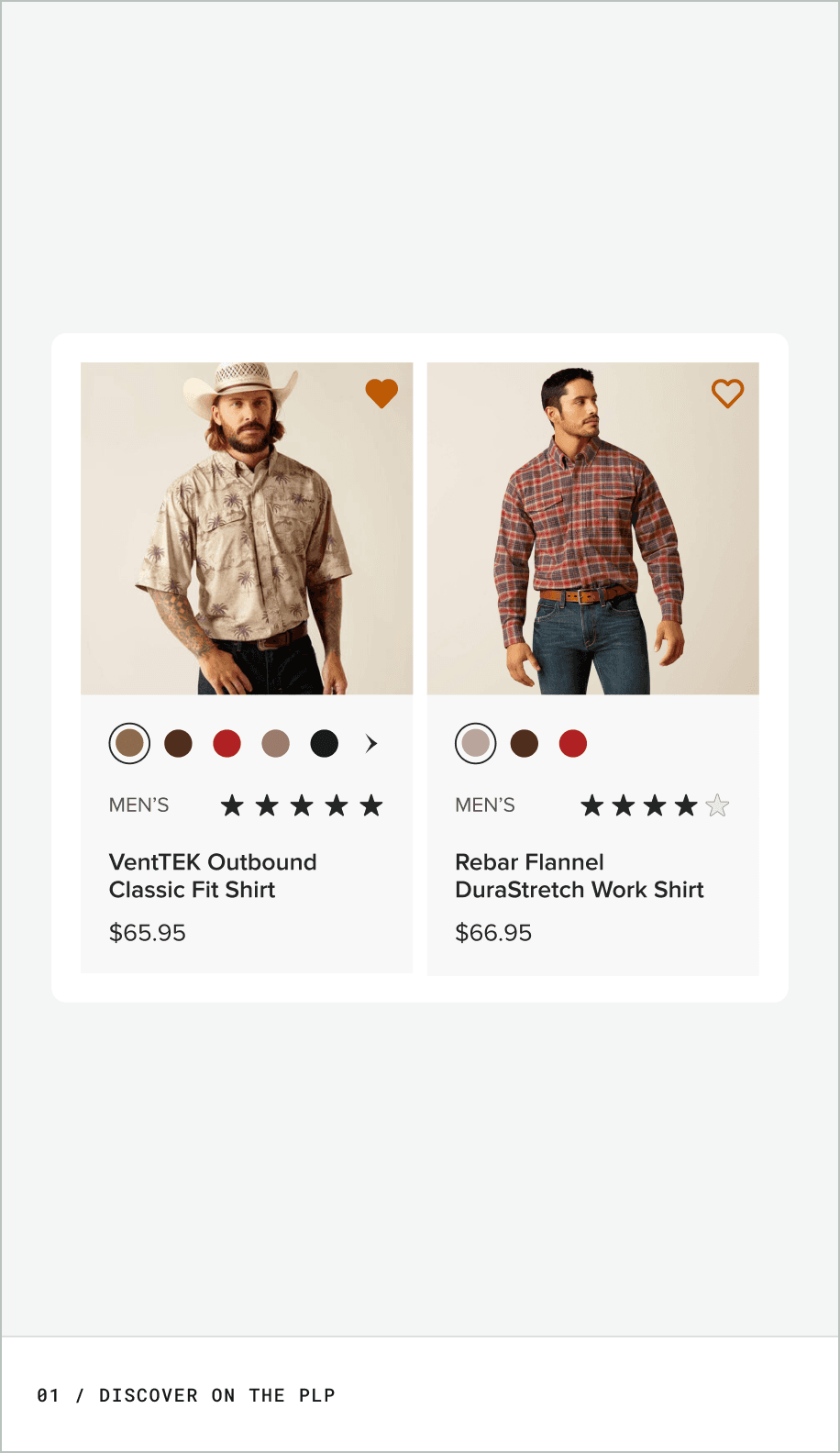
I recommended visible save actions on listing and product pages, with sign-in optional.
- 01SIGNAL
Intent appeared before commitment.
Benchmarking showed that saving worked best when it was visible during discovery, not buried behind an account.
- 02DECISION
Let people save first.
Remove sign-in as the opening move and place the action where shoppers naturally compare products.
- 03BEHAVIOR
Remembering becomes part of browsing.
The experience preserves intent across sessions and gives shoppers a clear path back when they are ready.
01 / CHANGE THE BEHAVIOR
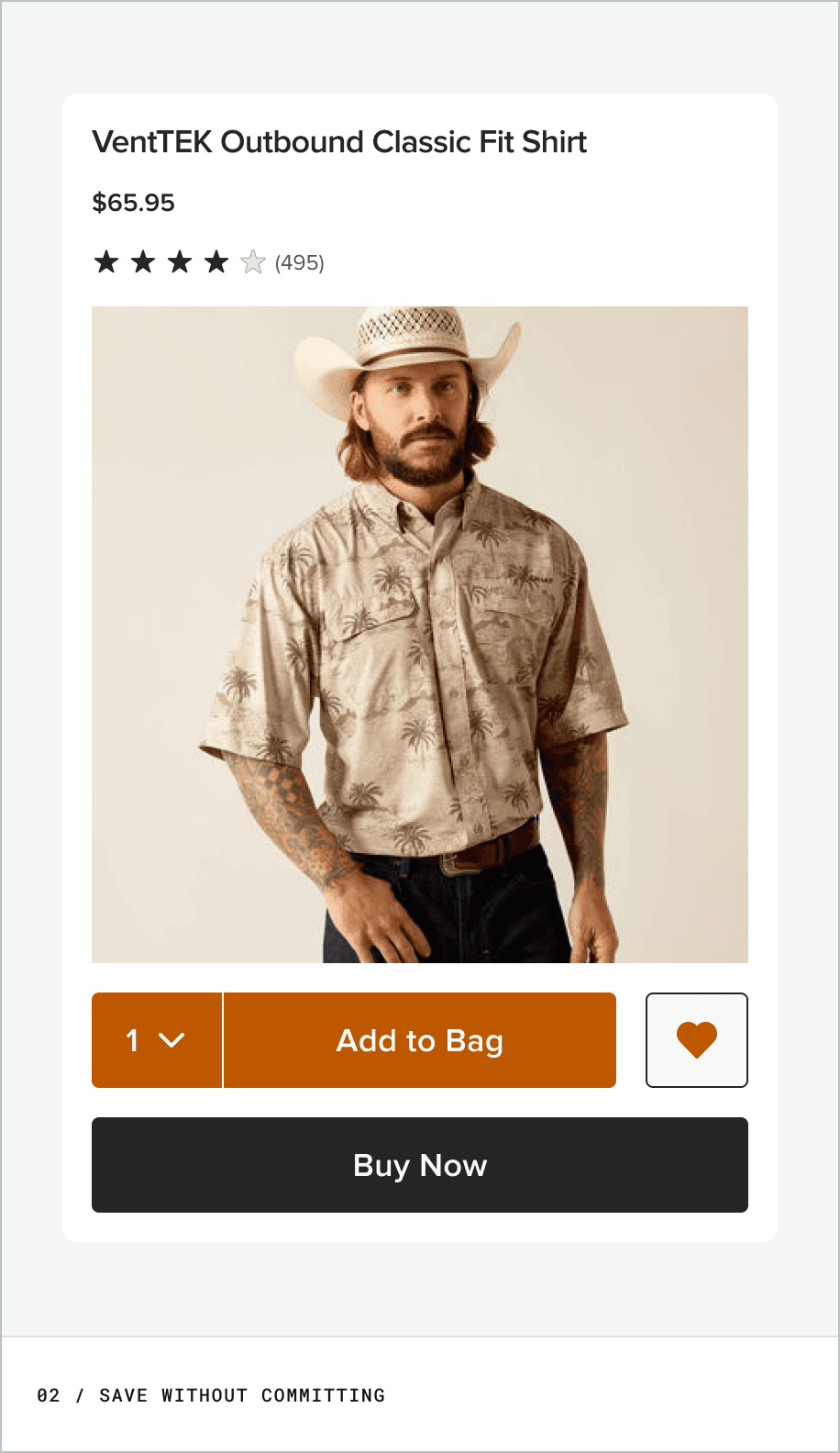
Save without signing in or choosing a size.
Guests can tap the heart and keep shopping.
We added Save for Later directly to the PLP, made the PDP action visible beside Add to Bag, clarified navigation, and kept the saved list useful for returning shoppers.
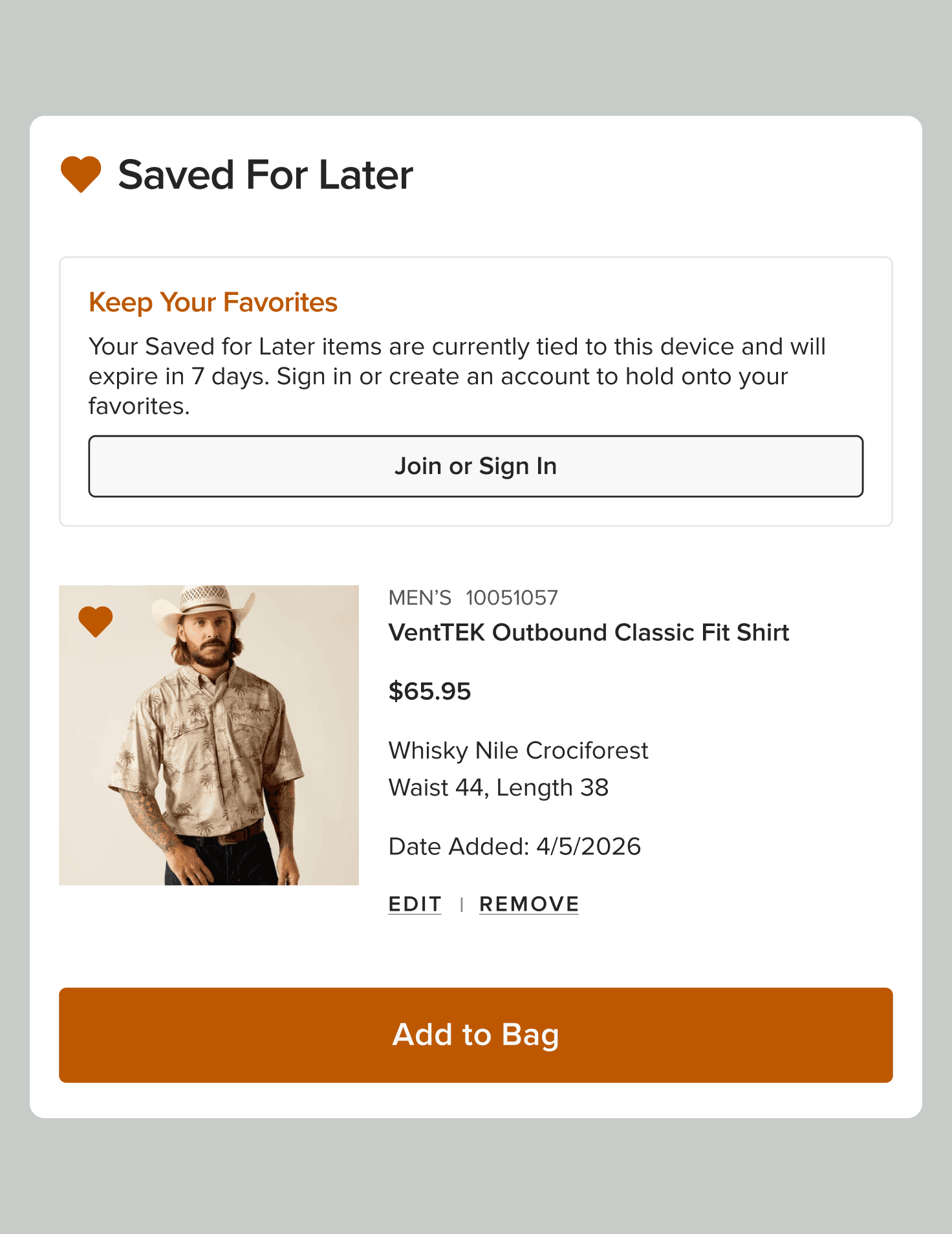
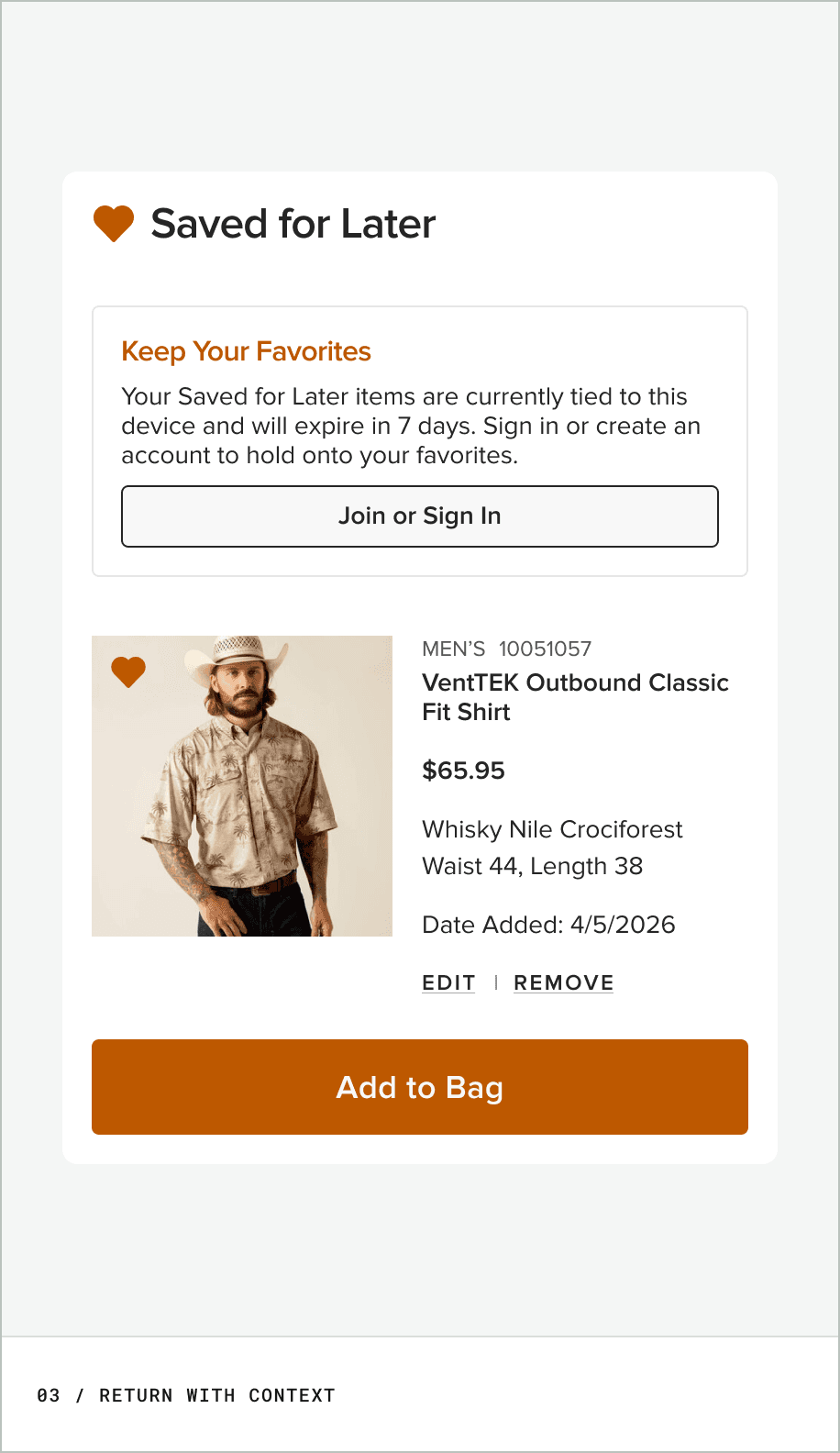
Guests could save immediately and keep the list on their device for seven days. Sign-in was offered only when they wanted their favorites to persist longer.
02 / MEASURE THE CHANGE
Use and attributed revenue grew after launch.
I worked with Analytics to track adoption, add-to-cart behavior, and attributed revenue. Weekly use grew without a sustained decline in add-to-cart activity.
POST-LAUNCH ANALYSIS THROUGH FEBRUARY 16, 2026. DIRECTIONAL READ: NO TRUE A/B TEST; HOLIDAY AND CUSTOMER-MIX EFFECTS CONSIDERED.
THE EXPERIENCE / DESKTOP HANDOFF
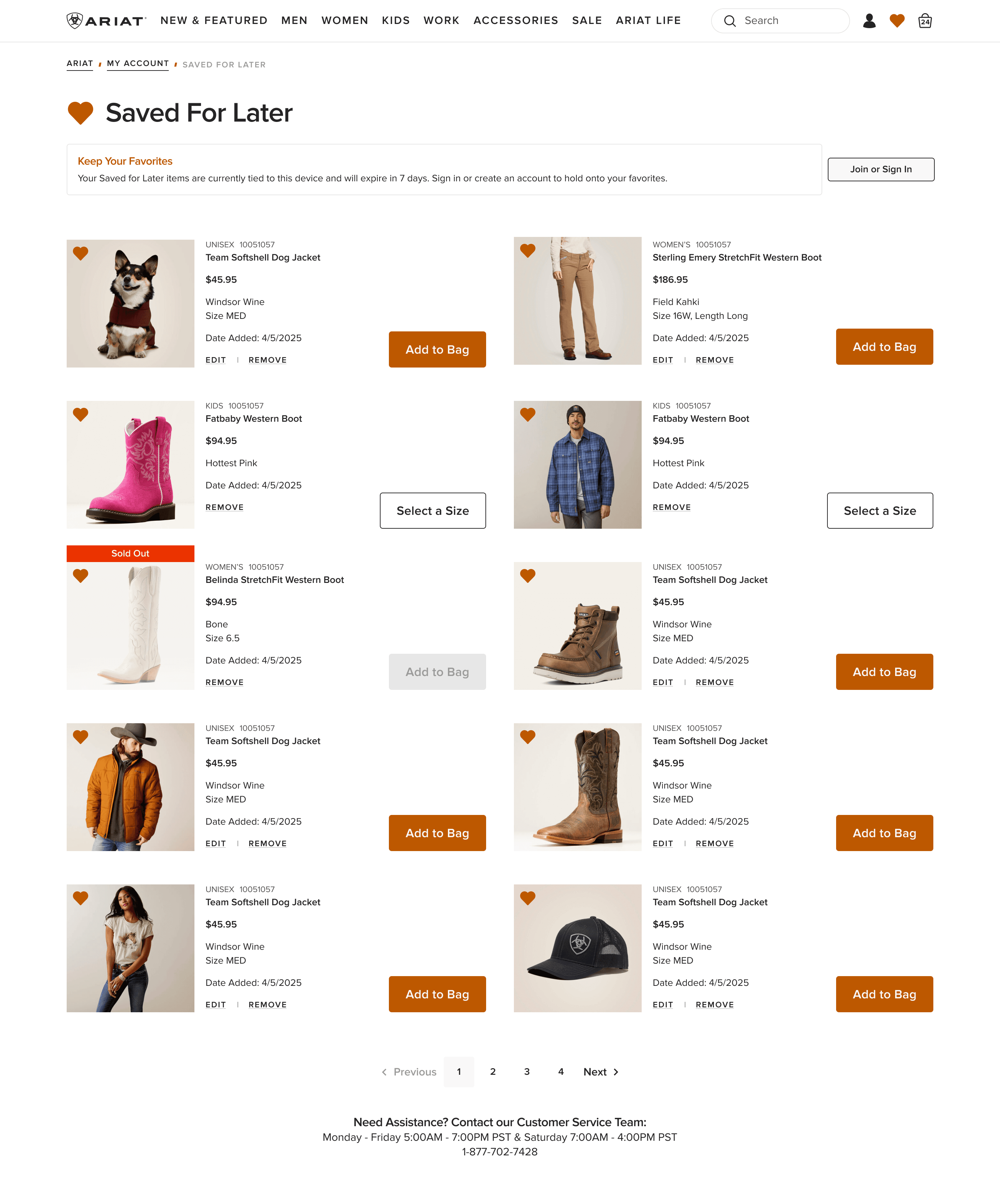
Return to the saved list when you’re ready to buy.
The saved list lets shoppers return to products and move them into the bag.